

The Cornerstone Memory That Still Runs the Show
How one unprocessed experience can shape our love, self-worth, and adulthood.

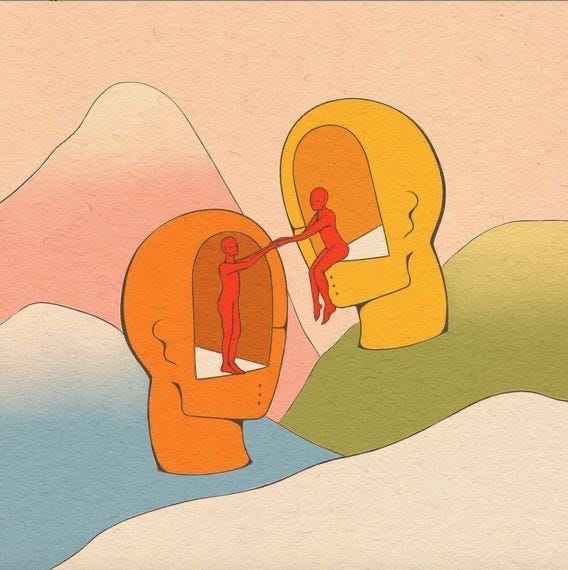
What if I told you there’s one moment from your childhood that you can still remember clear as day - a moment that quietly shifted the whole trajectory of your life without you even realizing it?
This is what Shan Boodram calls a “cornerstone memory.” She talks about it with actor André Holland on her podcast Lovers and Friends, and it instantly clicked for me. watch the episode here.
A cornerstone memory, as Shan explains, is an experience that shapes the way we move through life, and most importantly, how we experience love. It’s an anchoring moment that, if left unprocessed, hardens into a core belief.
And that core belief often turns into a lie that can wreak havoc on our relationships and self-worth for decades… until we actually take the time to revisit and reprocess it.
In the episode, André shares a story from fourth grade. He bought his classroom crush a Valentine’s Day gift that his mom helped him pick it out. He was excited, hopeful, and innocent. When he gave it to her, she handed it back and wrote on the card, “I hate you, N****.”
& just like that, what should’ve been a sweet childhood moment… turned into a hate crime.
He felt SO much shame, confusion, and hurt. He thought he did something wrong, that he was wrong. He didn’t tell his teacher or his mom and hid the card in the back of his sock drawer.
From that day forward, he developed a deep core belief that wasn’t true: that he wasn’t inherently deserving of love, that something about him was flawed. That belief shaped years of perfectionism, over-performing, and constantly proving himself - especially in predominantly white spaces. It made him feel like love had to be earned. It affected every single relationship he had.
He eventually realized this one memory was still making decisions for him as a grown man. It was blocking intimacy, authenticity, and actual connection. So he realized he had to heal the relationship he had with himself first.
This episode hit me deep, especially while being on my own inner child journey. I really do believe that the child inside of us is still running the show. And this work isn’t about blaming the past or blaming the people who raised us, it’s about understanding the meaning our younger selves attached to these moments.
Listening to André reflect also made me reflect on my own cornerstone memories.
My cornerstone memory is something I’ve shared here before, when my picture was posted on the “Malden’s Ugliest” Facebook page in sixth grade. That moment created a belief that I wasn’t beautiful. A belief I held onto for years until I finally questioned where it even came from.
Another corner stone memory came from a camp counselor telling me I needed to stop crying, that I was “too sensitive,” and that my feelings were too much. Crying was my natural response. I couldn’t stop my tears from flowing. This made me believe that crying was “weak” or “annoying.” That belief kept me emotionally guarded for so long.
Some other examples of cornerstone memories could be:
Being excluded from a friend group or left out of something you wanted to be part of
A parent or caregiver withholding affection or showing disappointment
Being criticized for something that felt natural, like crying, asking for help, or expressing your opinion
Being humiliated or shamed in front of peers or siblings
Experiencing a big change or loss that made you feel unsafe or invisible
And that’s the wild thing about cornerstone memories - they often look like tiny or isolated incidents from the outside, but they build an entire internal narrative around self-worth. As kids, we don’t analyze, we just assume. We fill in the gaps with simple, absolute beliefs… and those beliefs follow us into adulthood.
Some people don’t even remember their cornerstone memories because they were too overwhelming or in some cases, traumatic. For me, a lot resurfaced only after doing deeper subconscious work, inner child meditations, and actually giving myself space to feel things I once suppressed. The brain hides things to protect us, until those same hidden things start steering our lives.
These beliefs are powerful because they don’t just stay in childhood. They show up in the partners we choose, the friendships were in, the way we communicate, and the amount of love we allow ourselves to receive.
I relate to André’s realization that his cornerstone memory made him feel like he needed to earn love by being “perfect”. And how, because of that belief, he wasn’t allowing himself to show up fully in relationships.
Been there, done that.
But here’s what I know now - the only way to experience deep, meaningful love, with others and with ourselves, is by being 100% unapologetically who we are. Even the messy, awkward, shameful and uncomfortable parts.
It makes sense right? If you’re playing a role, it’s easier to get rejected as someone you’re not than it is to risk being rejected for who you are. But that also means you go through life unfulfilled by hiding and shrinking your natural essence and then repeating the same patterns your cornerstone memory created.
If any part of this resonates with you, I’d love to invite you to reflect on your own cornerstone memories. Positive or negative. Obvious or buried.
Start to observe the behavioral patterns that have followed you throughout your life. Try to get to the root of what belief has caused them. Once you figure that out -
Ask yourself:
“What moment from childhood still echoes in how I react today?”
“What belief did I attach to it?”
“Does that belief still hold true?”
Sit with your inner child.
Picture them. (I love doing this through visualization meditations)
Ask them what they needed in that moment.
Give them the reassurance or explanation they didn’t get.
Tell them they don’t need to hold onto that belief anymore.
We all have cornerstone memories… and the memories will always stay the same. But the meaning doesn’t have to. You’re not stuck with the beliefs you learned in survival mode.
Here’s the thing… once you start separating the memory from the belief, you create space to live differently! You can respond to life from love instead of shame, and from authenticity instead of trying to perform.
Your past doesn’t disappear, but the power it has over you can change. Healing isn’t about forgetting; it’s about deciding what story you want to tell yourself from now on. Reframe those memories into empowerment, and a reflection of inner strength.
So start imagining what life would feel like if those old beliefs didn’t hold you back. That’s where freedom starts and thats where real connection and love start.